
SUSTAINABILITY
SMARTER MATERIALS.BETTER MANUFACTURINGDECISIONS.
Responsible plastics manufacturing starts with the complete product requirement — material, design, process, useful life and end-of-life considerations.
- ISO 14001:2015Environmental management
- MATERIAL FIRSTApplication-led choices
- ONE ROUTECoordinated manufacturing stages
- LIFE-CYCLE VIEWFrom design to end-of-life
RESPONSIBLE MANUFACTURING
USE THE RIGHT MATERIAL.AVOID UNNECESSARY WASTE.
As a plastics manufacturer, we recognise our responsibility to use materials and resources efficiently. Sustainability means making better choices throughout the manufacturing route while keeping product performance and durability at the centre.
MATERIAL CHOICE
Evaluate performance, durability, processability and environmental impact together.
PRODUCT DESIGN
Use DFM to examine geometry, material use, assembly and future separation.
EFFICIENT PRODUCTION
Look for better material utilisation, process stability, energy efficiency and yield.
USEFUL LIFE
Design products to perform for as long as the application requires.
SMARTER MATERIALS
REQUIREMENTS FIRST.ALTERNATIVES WHERE THEY FIT.
We process a wide range of engineering polymers and can evaluate alternatives that may reduce the environmental impact of a product. The final material choice must still meet the complete technical and commercial requirement.
- RECYCLED & RECYCLABLE POLYMERS
- BIO-BASED MATERIALS
- WOOD-FIBRE BIOCOMPOSITES
- REDUCED FOSSIL-BASED CONTENT
- MATERIALS DESIGNED FOR IMPROVED CIRCULARITY
Suitability depends on the application, required performance, appearance, manufacturing process, cost and available material grade.
BIOCOMPOSITE EXPERIENCE
WOOD FIBRE WHERETHE PRODUCT ALLOWS IT.
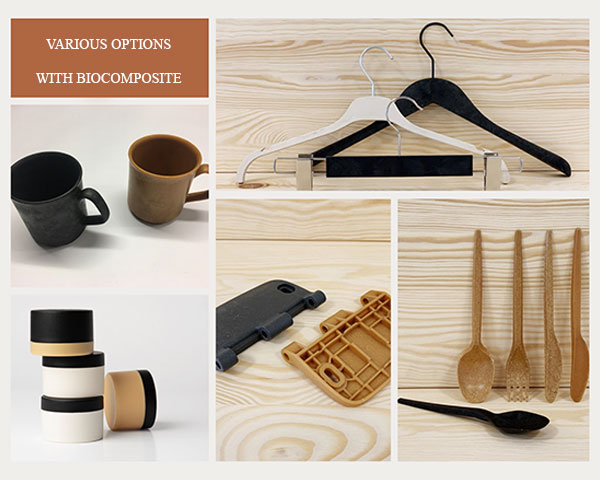
Vesimentor has experience with wood-fibre reinforced biocomposites, including materials developed by Stora Enso. These materials combine wood fibres with polymers so that renewable raw material can replace part of the conventional plastic content while remaining compatible with industrial manufacturing processes such as injection moulding.
PARTIAL RENEWABLE CONTENT
Wood fibre replaces part of the conventional plastic content.
INJECTION-MOULDING COMPATIBILITY
Material and part suitability must be evaluated for the project.
APPLICATION-LED DECISION
Performance, appearance, durability and end-of-life remain part of the review.
DESIGN WITH THE FULL LIFE CYCLE IN MIND
BETTER DECISIONSBEFORE PRODUCTION.
DFM, material selection and production planning create the greatest opportunity to improve the manufacturing route before serial production begins.
- 01FUNCTIONWhat the product must do
- 02MATERIALRequired properties and alternatives
- 03GEOMETRYMaterial use and manufacturability
- 04PROCESSStable and efficient production route
- 05USEDurability for the intended application
- 06END OF LIFESeparation, reuse or recycling considerations
EFFICIENT PRODUCTION
SUSTAINABILITY IS MORETHAN CHANGING THE MATERIAL.
We continuously look for practical opportunities to improve how materials, equipment and manufacturing stages are used.
MATERIAL UTILISATION
Reduce unnecessary material use and avoidable production waste.
PROCESS STABILITY
Stable processes support consistent output and reduce avoidable losses.
PRODUCTION YIELD
Review the route and settings with efficient production in mind.
COORDINATED STAGES
Moulding, finishing, sealing, assembly and packaging can be planned within one manufacturing organisation.
Where technically suitable and approved for the application, production material can be recovered and reprocessed.
ENVIRONMENTAL MANAGEMENT
A SYSTEM FORONGOING IMPROVEMENT.
ISO 14001:2015
Environmental management system
MANAGE
Use a documented framework for environmental responsibilities.
REVIEW
Consider materials, resources and production decisions.
IMPROVE
Look for practical opportunities within the manufacturing route.
EU-FUNDED DEVELOPMENT PROJECTS
DIGITALISATION ANDMORE EFFICIENT OPERATIONS.
Vesimentor is developing its production planning, data use and automation through two supported projects.
DIGITALIZATION AND AUTOMATION OF VESIMENTOR OÜ
NextGenerationEU
Project focus: digital production planning, real-time production feedback, digital work instructions, increased automation and visual quality-control development.
EU funding: €351,680
PROJECT SUMMARY
Vesimentor OÜ is an Estonian-owned manufacturing and product development company that began operations in 1997. The company specialises in the production of plastic products and has established a strong export portfolio, reflecting the quality and international competitiveness of its products.
The goal of this project is to increase production efficiency and flexibility through digitalisation and automation. Wider implementation of digital solutions will optimise production planning, enable real-time feedback from manufacturing processes, support more efficient production scheduling and allow for faster delivery times to customers.
OBJECTIVE
The main objective of the project is to streamline the entire operational process—from sales order management to final product delivery—by reducing the need for manual labour, accelerating and improving the accuracy of production data collection and automating monotonous tasks.
A key focus is the automation of visual quality-control processes. The project also aims to digitalise and automate production planning and implement real-time monitoring of machine performance, supporting productivity, quality and responsiveness. Improved planning based on digital data will allow production to be adjusted more quickly in response to changing needs.
RESULT
The planned result is to free up valuable production time and support increased output. The company’s ability to respond and redirect production is expected to improve.
The project includes the digitalisation of work instructions, integration of new injection-moulding machines, increased use of robotics, improved visibility of production performance and development of automated visual quality control.
FUNDING
The project is funded by the European Union through the NextGenerationEU initiative, with a total amount of €351,680.
DIGITISATION ROADMAP FOR VESIMENTOR OÜ
European Regional Development Fund
A three-year roadmap assessing digitalisation, automation, bottlenecks, investment priorities, expected business impact and cyber-security needs.
Co-financing: €7,000
BRIEF DESCRIPTION
The aim of the digitalisation roadmap is to develop options for optimising operations and eliminating bottlenecks by analysing the company’s current activities and processes.
The digitalisation roadmap is a strategy document with a three-year action plan. It includes an assessment of the company’s digitalisation and automation, the investments required to remove bottlenecks, expected return on investment, business impact and cyber-security needs arising from the proposals.
OBJECTIVE
The roadmap will set out a plan for achieving the digitalisation objectives, a three-year action plan and an assessment of the expected financial impact. It will provide a basis for planning the company’s further digitalisation.
The broader objective is to increase the competitiveness and sustainability of Vesimentor OÜ through digitalisation, including improved production efficiency, reduced costs and improved quality.
RESULT
The project will result in a detailed digital roadmap covering the key areas of the business. It is intended to support productivity growth, reduce human error and improve traceability in production processes.
AMOUNT OF SUPPORT
The project is co-financed by the European Regional Development Fund for an amount of €7,000.
SUSTAINABILITY
QUESTIONS
Yes. Recycled or recyclable polymers can be evaluated when the available material grade meets the product’s mechanical, thermal, cosmetic, regulatory and manufacturing requirements.
A wood-fibre biocomposite combines wood fibres with a polymer. This allows renewable raw material to replace part of the conventional plastic content while retaining compatibility with suitable industrial manufacturing processes. Suitability must be assessed for the specific component and application.
Where technically suitable and approved for the application, production material may be recovered and reprocessed. The decision depends on the material, required performance, appearance, process and customer requirements.
DFM can help review material use, wall sections, component geometry, assembly requirements, manufacturing efficiency and future separation before tooling and serial production begin.
HAVE A PRODUCT OR MATERIAL QUESTION?
LET’S REVIEW THEBETTER ROUTE.
Share the product requirements, expected use conditions, material preferences and annual volumes. Our team will assess the material and manufacturing options together.