
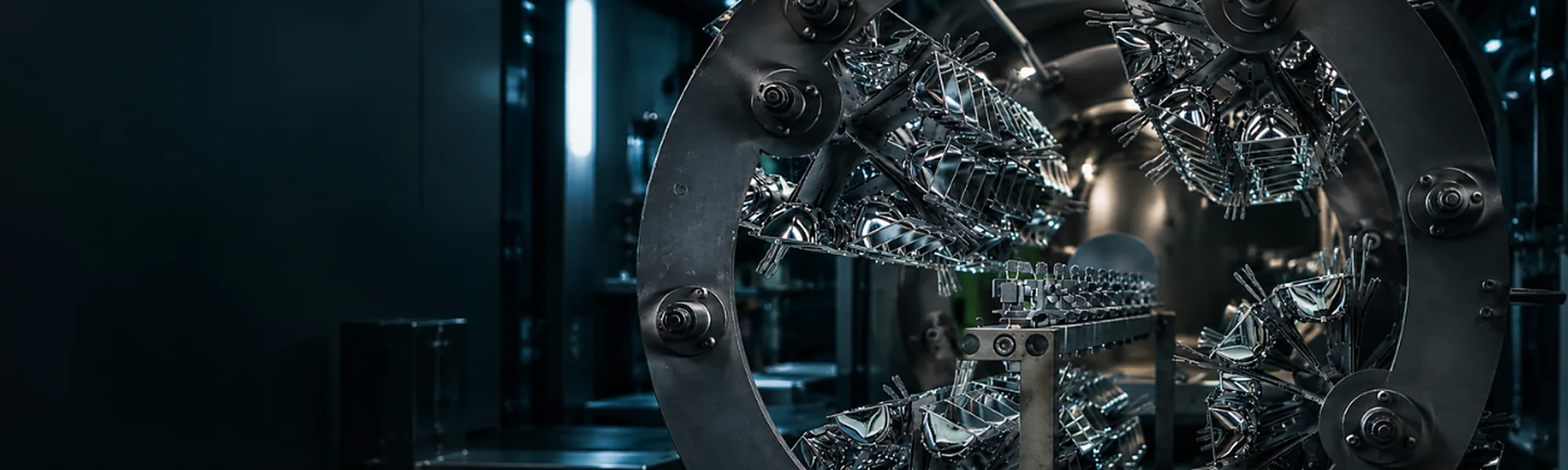
Vacuum Metallizing of Plastic Parts
Control the surface.Complete the component.
Plastic components and vacuum metallizing reviewed as one manufacturing route — from substrate and geometry to appearance, protection and final assembly.
- Moulded substratesPart and finish developed together
- Thin metal layerApplied to the prepared component
- Reflective or decorativeAppearance defined for the project
- One supply scopeMoulding, finish and assembly
The finish starts with the part
Design the substrateand surface together.
The final result depends on more than the coating step. Substrate material, moulded geometry, visible surfaces, preparation and the intended environment must be reviewed as one system.
Substrate
Material and moulded surface
Geometry
Edges, recesses and presentation
Appearance
Reflective or decorative target
End use
Environment and handling
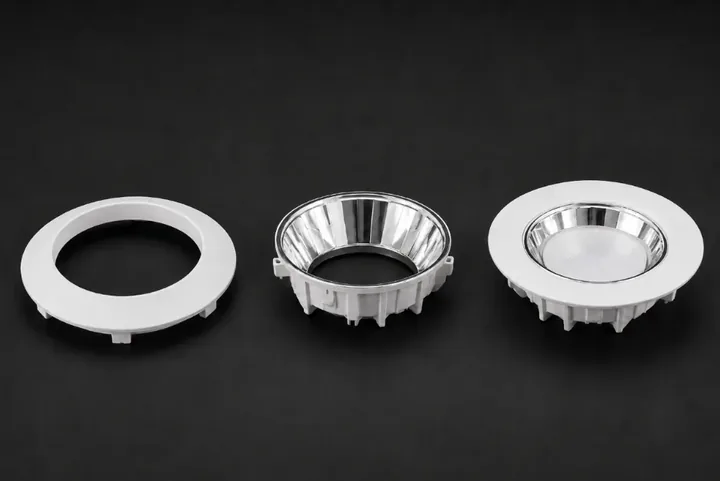
Finish and part-size feasibility are confirmed for the individual project.
The metallizing process
From moulded part to finished surface.
- 01
Define
Areas, appearance and requirements
- 02
Mould
Substrate and geometry prepared
- 03
Prepare
Surface route selected for the part
- 04
Metallize
Thin metal layer applied under vacuum
- 05
Protect
Finish selected for the application
- 06
Verify
Appearance and agreed criteria reviewed
The exact process route and acceptance criteria are defined according to the component and its intended use.
Surface & appearance requirements
Specify what the finishedpart must achieve.
Clear input helps define the suitable manufacturing route and the areas that require particular attention.
Coating areas
Mark surfaces to be metallized and areas to remain free.
Reference appearance
Provide a sample where visual matching is critical.
Substrate material
State the exact grade where known.
Part geometry
Review recesses, edges, masking and handling.
Use environment
Describe temperature, chemicals, wear and exposure.
Acceptance criteria
Agree appearance and functional requirements.
A reflective appearance does not by itself define durability or functional performance. Required properties must be specified and verified for the project.
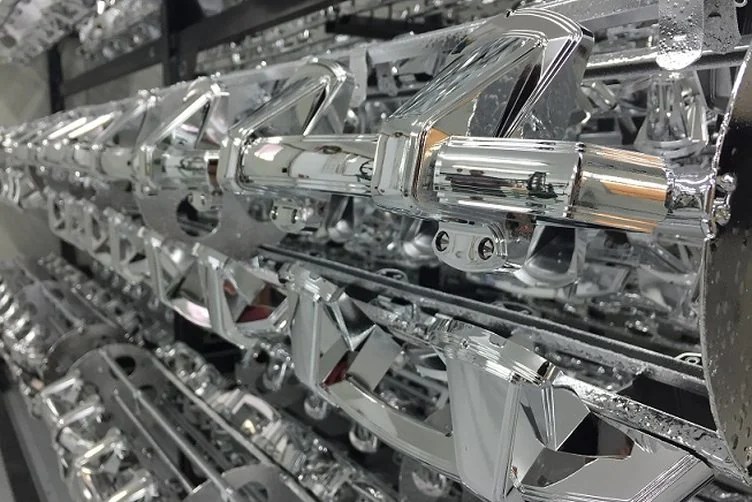
Real parts. Controlled requirements.
Reflective surfaces fortechnical components.
Metallized components are reviewed for substrate condition, geometry, appearance and the way they will be handled after coating. Production and inspection requirements are agreed against the project specification.
Visible surfaces
Define cosmetic priority areas
Racking & handling
Consider contact and support points
Consistency
Use an agreed reference and criteria
Post-processing
Plan assembly and packaging
Review the complete application
Appearance is only one partof the requirement.
Where the surface also has a technical role, describe the intended function and operating conditions. Vesimentor can then review the proposed substrate, geometry, metallizing route and any subsequent operations.
Decorative appearance
Colour, reflectivity and visual reference.
Reflector geometry
Optical form and presentation surfaces defined by the part.
Environment
Temperature, chemicals, cleaning, wear and exposure.
Assembly interfaces
Areas that touch, join, seal or remain uncoated.
Do not assume a coating system is suitable from appearance alone. Performance requirements require project-specific definition and validation.
One connected manufacturing route
Plan what happens beforeand after metallizing.
A metallized component may also require moulding, machining, sealing, joining or assembly. Include the complete scope at the enquiry stage so that materials, surfaces and interfaces can be reviewed together.
Injection moulding
Substrate and part geometry developed for the component.
Vacuum metallizing
Surface route defined for the approved part.
Machining
Post-processing where the agreed geometry requires it.
Sealing & joining
FIPFG, potting or ultrasonic welding where suitable.
Assembly & packaging
Final completion and protection within the agreed scope.
What to send for a review
Start with the part, finishand operating conditions.
Part & surface data
- 2D drawing and 3D model
- Substrate material and grade
- Areas to be metallized
- Areas to remain free of coating
- Reference sample or appearance target
Project requirements
- Intended use and environment
- Expected annual quantity
- Appearance acceptance criteria
- Required coating performance
- Assembly and packaging scope
ISO 9001|ISO 14001|AQAP 2110
Vacuum metallizingQuestions
Vacuum metallizing deposits a thin metal layer onto a prepared component under vacuum. The substrate, geometry, surface preparation, required appearance and any protective finish are reviewed according to the specific part and application.
Provide the 2D drawing and 3D model, substrate material, areas to be metallized, areas to remain free of coating, expected quantity and intended operating conditions. Include an appearance reference and required performance criteria where applicable.
A physical sample or other agreed reference can be used to define the intended appearance and acceptance criteria. Feasibility and the approval route must be confirmed for the specific substrate, geometry and coating system; an exact match must not be assumed before project review and sampling.
Where suitable and included in the agreed project scope, the manufacturing route may include injection moulding, metallizing, machining, sealing, joining, assembly and packaging. These requirements should be identified at the enquiry stage.
Have a part or finish in mind?
Send the drawing and appearance requirements.
Share the part drawing, substrate material, expected quantity and appearance reference. Identify the areas to be metallized, functional surfaces and any environmental or coating-performance requirements.